


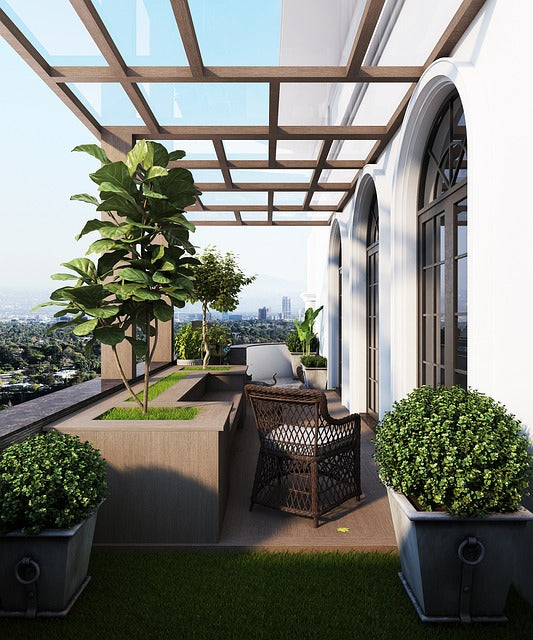
Choosing the right planter helps your plants thrive and complements the look of your space. Before buying a pot, tub or planter, consider these seven practical points.
1. Size and available space
Measure the area where you want to place your planter. Check the maximum height and width that will fit comfortably, leaving enough room for the plant to develop and for you to move around it.
2. Materials
Planters come in a range of materials, including wood, plastic, metal, terracotta and composites. Choose according to your plants' needs, the location and the appearance you prefer. Here are five common options and their main advantages and limitations.
Wood
- Advantages: A warm, natural appearance that works well in gardens and on terraces. Suitable products can be painted or stained to match your surroundings.
- Limitations: Wood needs regular care and may deteriorate over time, especially when it remains damp. Its durability depends on the type of wood, its treatment and the conditions in which it is used.
Plastic
- Advantages: Usually light, affordable and easy to clean, with a wide choice of colours and shapes. It can help retain moisture for plants that prefer a more consistently moist growing medium.
- Limitations: Some plastics may become brittle or lose their shape after prolonged exposure to strong sunlight. The finish may also look less natural than other materials.
Metal, including steel and aluminium
- Advantages: A contemporary appearance and a wide range of finishes. Some metal planters are relatively light and easy to position.
- Limitations: Resistance to corrosion depends on the metal and its protective finish. Metal can become hot in direct sunlight, so consider how exposed the planter and its roots will be.
Terracotta
- Advantages: A traditional, natural appearance. Unglazed terracotta is porous and allows moisture to pass through the walls of the pot.
- Limitations: It is heavier than many plastic or composite alternatives and can break if knocked. Frost resistance varies, so check the product's specifications and provide winter protection where needed.
Fibreglass and composite materials
- Advantages: Often lighter than their appearance suggests, with many styles and colours available. Suitable outdoor models can offer good resistance to weathering and are generally easy to clean.
- Limitations: They may cost more than simpler alternatives, and quality and performance vary between products and manufacturers.
No single material is right for every situation. Balance appearance, durability and ease of handling with the conditions in which your plants will grow.
3. Drainage
Good drainage helps prevent roots from sitting in excess water. For conventional planting in compost, choose a container with drainage holes and keep those openings clear so surplus water can escape. Check how water will be collected or drained away before installing the planter.
4. Style and design
Look for a shape and finish that suit your surroundings. A classic terracotta pot, a simple contemporary container or a textured planter can each create a different effect. Consider the proportions of the plant and container together, as well as the furniture and materials nearby.
5. Weather resistance
If the planter will stay outdoors, check that it is designed for those conditions. Exposure to sun, rain and frost can affect materials differently. Follow the manufacturer's guidance on outdoor use and winter protection.
6. Weight
Take into account the total weight once the planter contains compost, a plant and water. Check that the intended support can carry it and plan how you will move and position the container before filling it.
7. Practical features for indoor use
For an indoor planter, consider a suitable saucer or a watertight outer container to protect the floor. Plan where excess water will go and how you will access the plant for watering and routine care.
Taking time to compare these points will help you choose a planter that looks right in your space and provides suitable growing conditions for your plants.